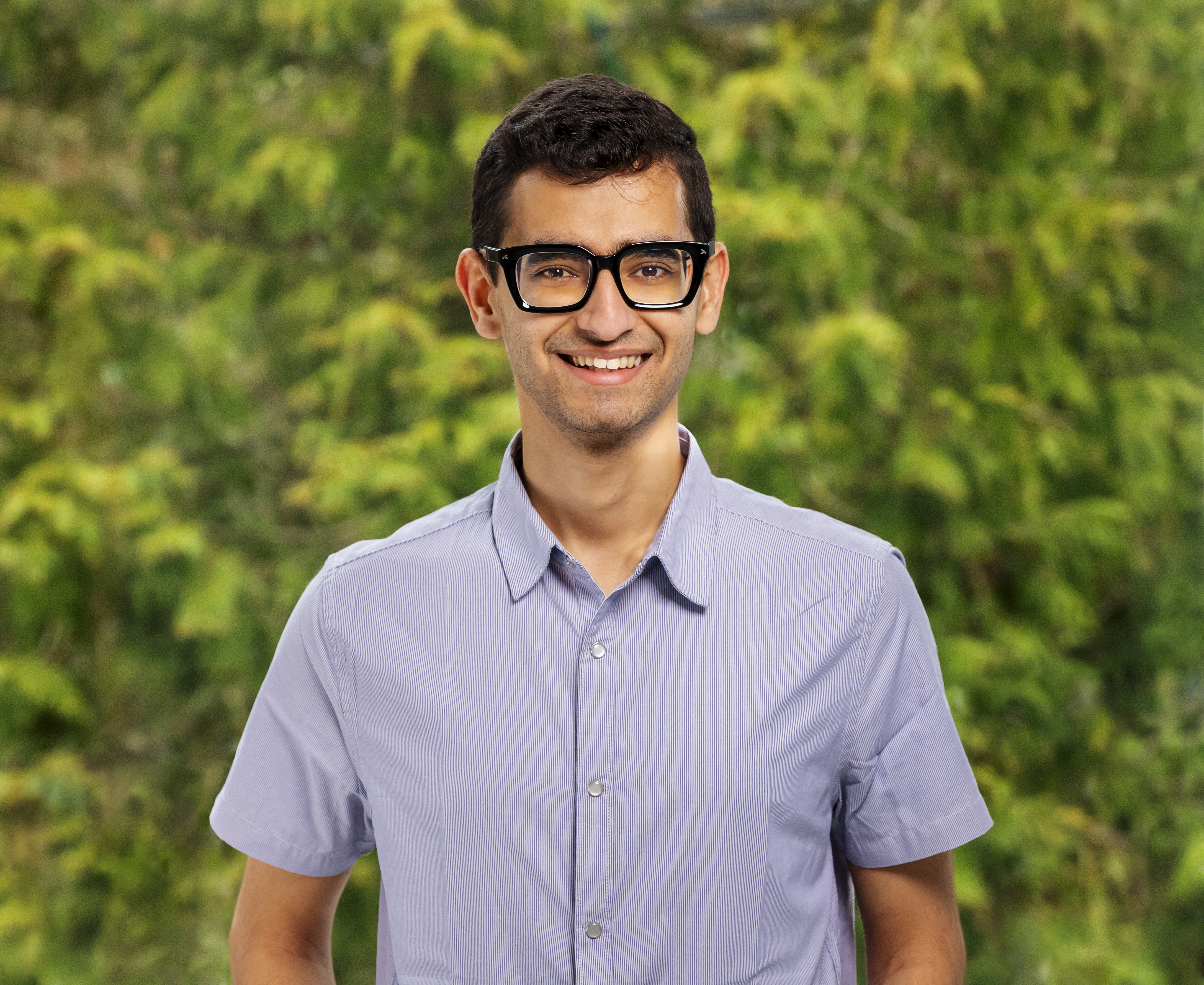

I am an incoming assistant professor at the UC Berkeley
School of Information, starting in July 2027, and a founder of the research non-profit STABL.
In July 2026, I completed my Ph.D. in computer science from Princeton University,
where I was named a Porter Ogden Jacobus Fellow,
Princeton University's highest honor for a graduate student.
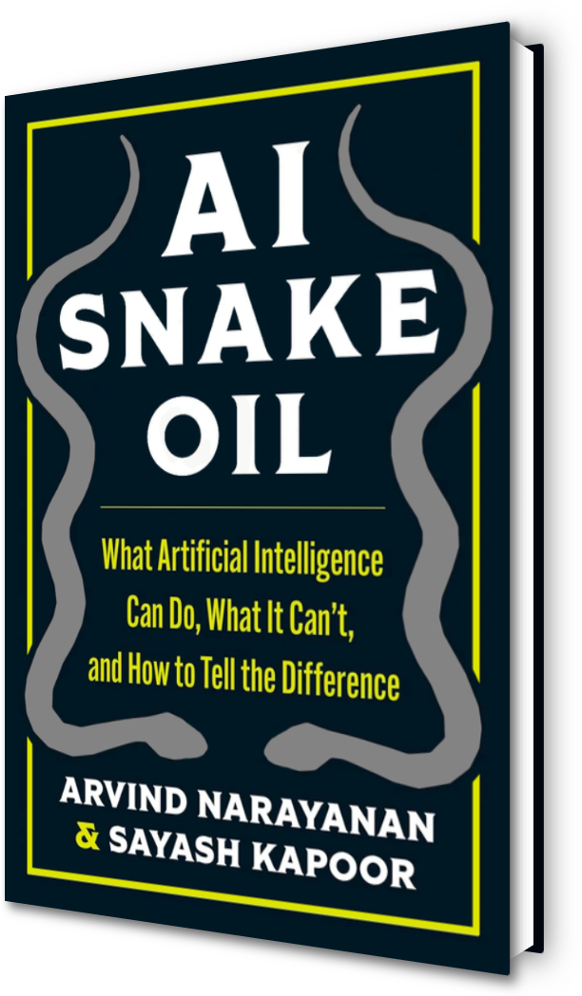
I am a co-author of AI Snake Oil, one of
Nature's 10 best books of 2024,
the essay AI as Normal Technology,
and a newsletter by the same name that is read by over 90,000 AI enthusiasts,
researchers, policymakers, and journalists. I was named one of
MIT Technology Review’s 2026 Innovators Under 35.
I received a best paper award at ACM FAccT, an impact recognition award at ACM CSCW, and a Privacy Papers for Policymakers award.
I was also included in TIME's inaugural list of the 100 most influential people in AI.
I recently founded STABL, a research non-profit that focuses on guiding efforts on societal adaptation and resilience to advanced AI. Read more.
Prospective Ph.D. applicants: If you are interested in working with me at Berkeley, please fill out this form.
The science of AI evaluation
I study how to evaluate AI agents and frontier systems by building large-scale systems to conduct evaluations at scale.
- Reliability: Towards a Science of AI Agent Reliability (ICML 2026)
- Large-scale agent evaluation: HAL: Holistic Agent Leaderboard (ICLR 2026) · Project page
- Evaluation methods and ecosystem: Emerging Trends in AI Agent Evaluation
- Long-horizon, open-ended evaluation: CRUX: Open-world evaluations for frontier AI capabilities · Can AI agents conduct open-ended AI research? (preprint, 2026) · Follow-up research note
AI as Normal Technology
With Arvind Narayanan, I write the AI as Normal Technology newsletter, where we analyze AI as transformative but normal technology, not superintelligence.
- Framework: AI as Normal Technology · Guide to AI as normal technology · AGI is not a milestone
- AI and institutions: Software engineering · Legal services · Scientific research
- Recommendations for policymakers: Government responses to AI's transformative impacts · Loss-of-control incidents
Evidence-based AI policy
I work on AI policy grounded in evidence about model openness, evaluation access, transparency, and accountability.
-
Open foundation models:
Science (2024): governance considerations for open foundation models.
ICML oral (2024): societal impacts of open foundation models. - FMTI: A longitudinal effort to measure transparency across leading foundation model developers: 2025 (TMLR 2026) · 2024 (TMLR 2025) · 2023 (TMLR 2025)
-
Accountability and input:
FLARE-AI (ICML 2026): interoperable AI flaw reporting.
ASAP RFI on AI-based science.
New Jersey Assembly: reducing harm from deepfakes.
Congressional Forum: accountability in predictive AI.
AI-based science
I study how AI-based science fails to reproduce and what practices, benchmarks, and reporting standards can make computational research more credible.
- Reproducibility: Leakage and the reproducibility crisis in ML-based science (Patterns 2023) · REFORMS: Consensus-based Recommendations for Machine-learning-based Science (Science Advances 2024).
- Benchmarking agents for reproducibility: A benchmark for evaluating AI's ability to reproduce computational research (CORE-Bench, TMLR 2024).
- Essays: Could AI slow science? (AI as Normal Technology 2025) · Scientists should use AI as a tool, not an oracle (AI as Normal Technology 2024).